

How to make a summer salad that actually keeps you full
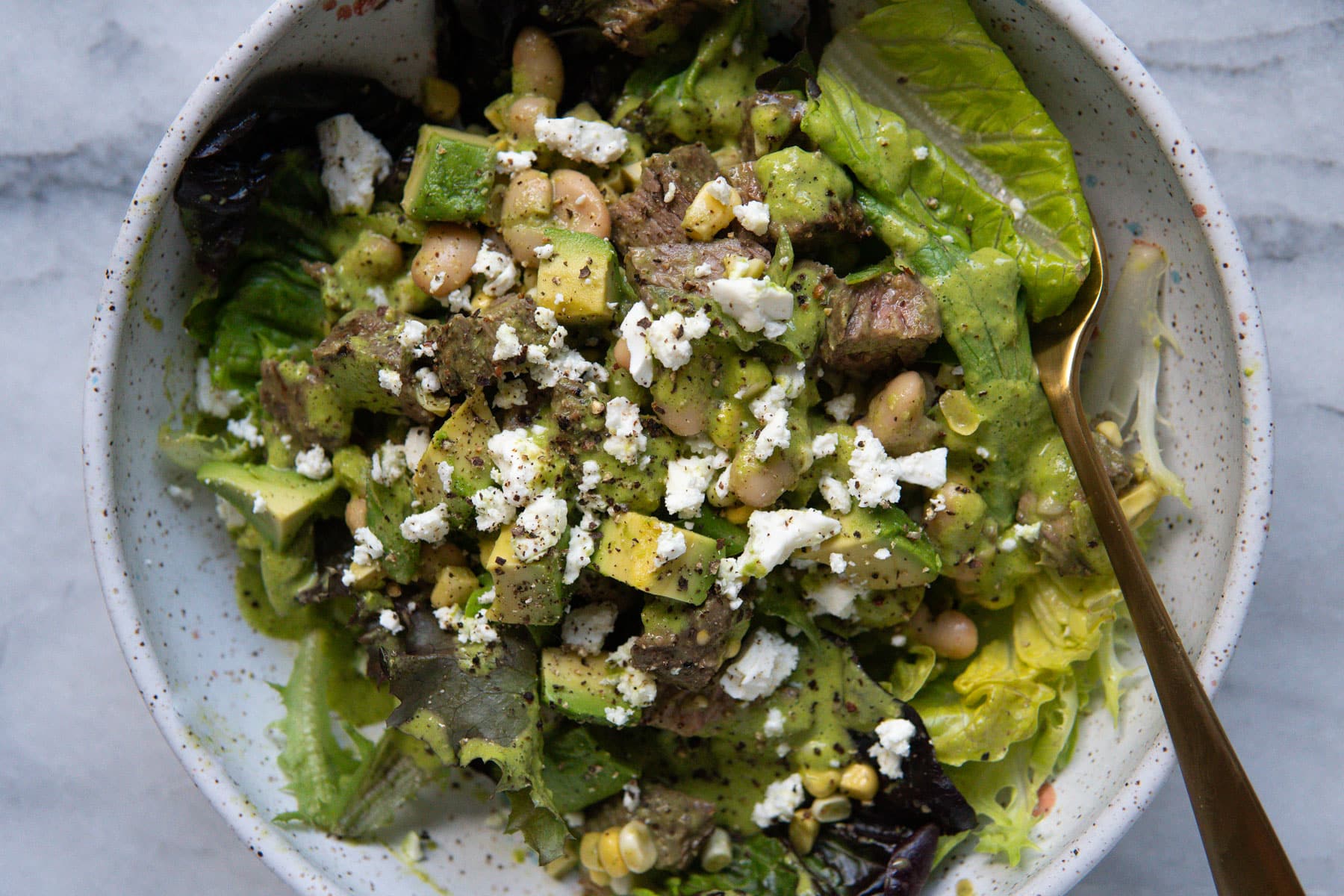
Summer salads sound like the perfect meal when it’s hot out: fresh, colorful, easy to throw together, and full of seasonal produce. But we’ve all had the experience of eating a giant bowl of greens for lunch, only to find ourselves rummaging through the pantry an hour later. That doesn’t mean salads can’t be satisfying. […]
Summer salads sound like the perfect meal when it’s hot out: fresh, colorful, easy to throw together, and full of seasonal produce. But we’ve all had the experience of eating a giant bowl of greens for lunch, only to find ourselves rummaging through the pantry an hour later.
That doesn’t mean salads can’t be satisfying. It usually just means the salad was made mostly with veggies and didn’t contain enough energy or substance to function as a complete meal.
Veggies are good for you, but lettuce, cucumbers, tomatoes, and a light drizzle of vinaigrette may not provide much protein, carbohydrates, fat, or overall substance. To build a salad that actually keeps you full, think beyond the vegetables and use this simple formula:
**Produce + protein + carbohydrates + fat + plenty of flavor**
You don’t have to measure everything or make sure every salad is perfectly balanced. This is simply a helpful framework for turning a side salad into a satisfying meal.
Start with plenty of produce
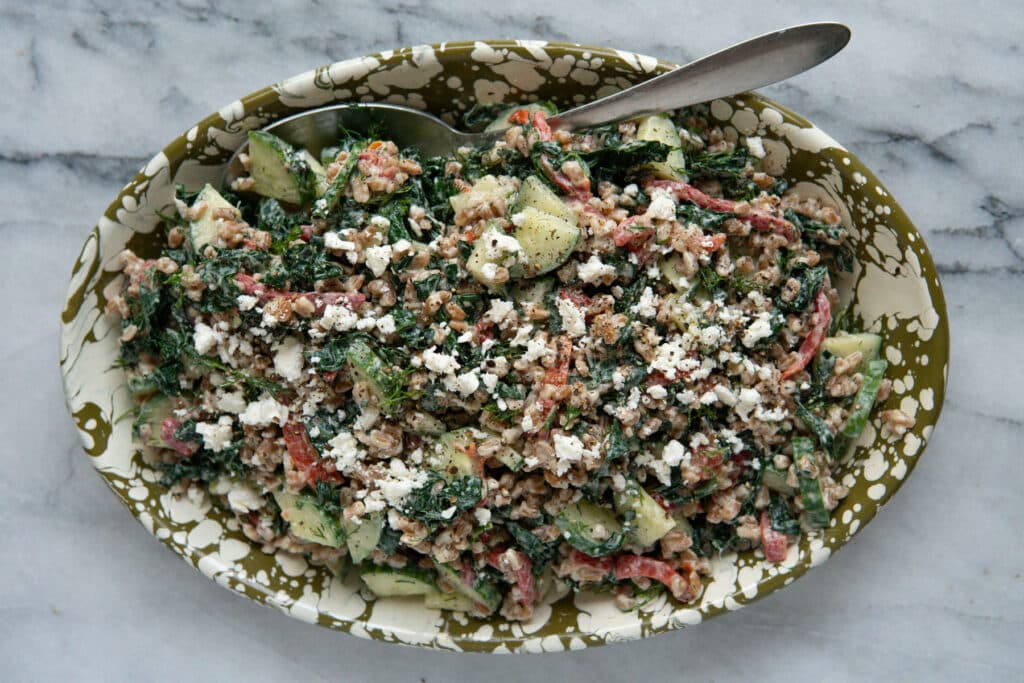
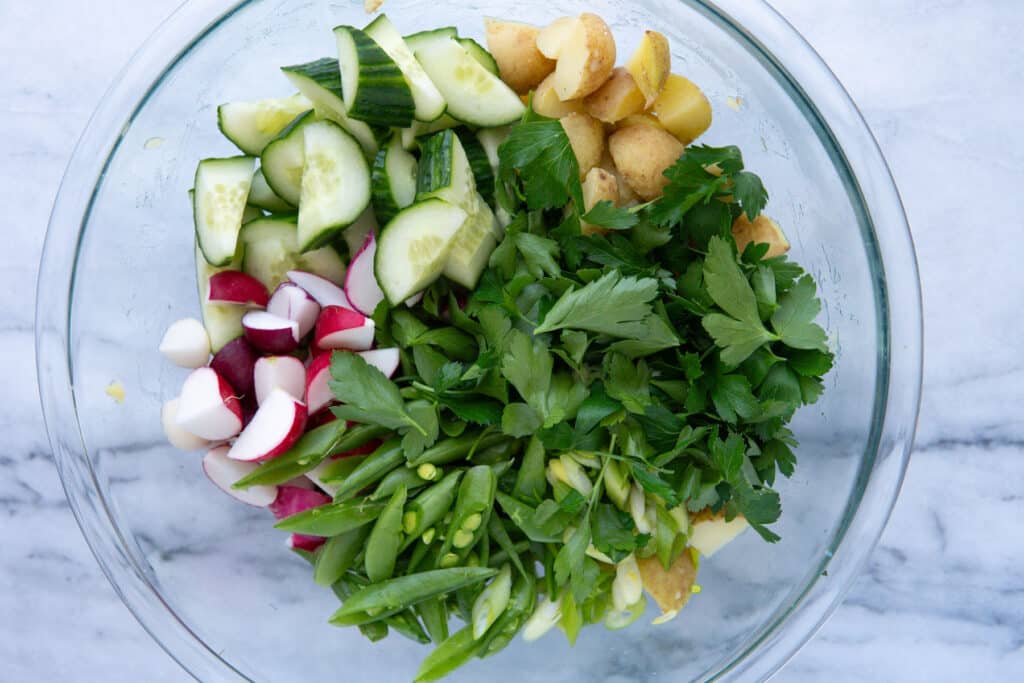
Greens can be part of your salad, but they don’t have to make up the entire base. Try combining lettuce or arugula with a variety of raw and cooked vegetables, fruit, and fresh herbs.
Some favorites include:
- Tomatoes
- Cucumbers
- Bell peppers
- Corn
- Zucchini
- Peaches, nectarines, cherries, berries, or melon
- Basil, parsley, cilantro, dill, mint, or scallions
I especially love mixing raw and cooked vegetables. Grilled peppers, corn, zucchini, eggplant, or green beans make a salad feel more substantial while adding different flavors and textures
Add a meaningful source of protein

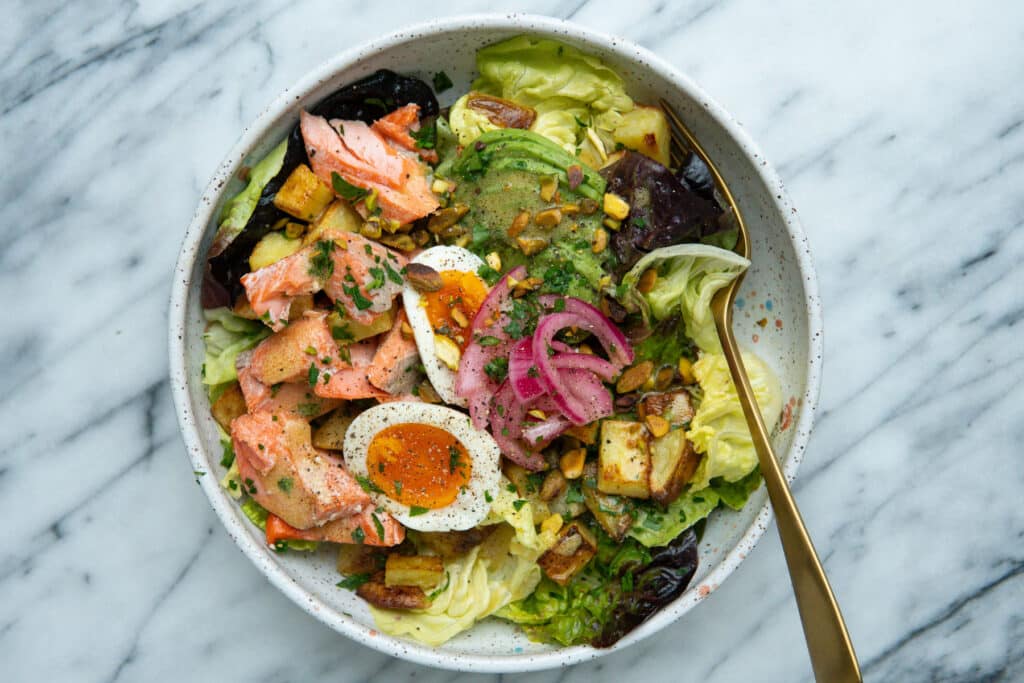
Protein helps turn a bowl of vegetables into a complete and satisfying meal.
Good protein options for salads include:
- Grilled chicken, steak, salmon, or shrimp
- Tuna or other tinned fish
- Eggs
- Beans or lentils
- Edamame
- Tofu or tempeh
Cheese, nuts, and seeds also contribute some protein, but a small sprinkle usually isn’t enough to serve as the main protein source. You can absolutely include them—just pair them with beans, eggs, meat, fish, tofu, or another more substantial option.
Don’t forget the carbohydrates
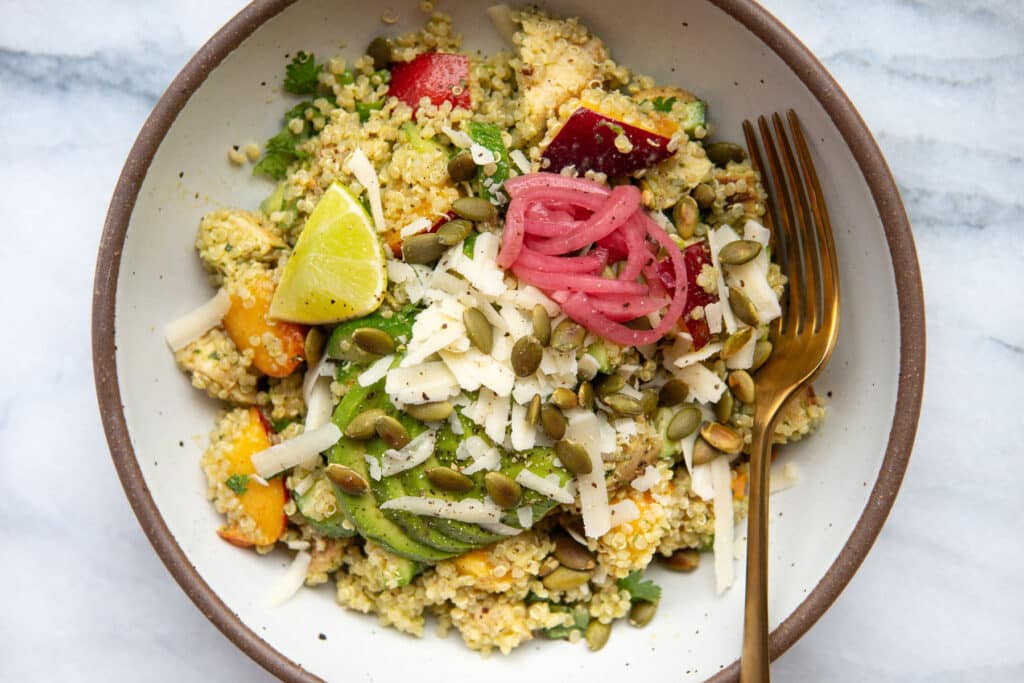
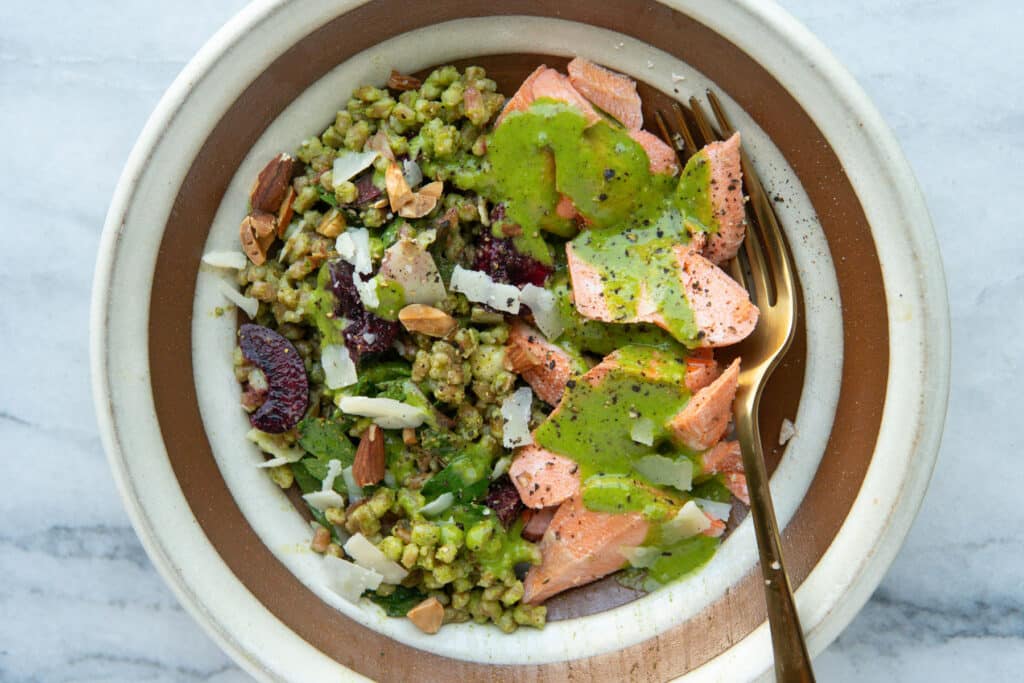
This is the component people most often leave out when making a meal-sized salad. Carbohydrates give you energy and help make a salad feel like an actual meal rather than just a bowl of vegetables with toppings.
They’re especially important if you’re active, eating the salad after a workout, or need it to carry you through a busy afternoon.
Try adding:
- Farro, quinoa, rice, or pasta
- Roasted or boiled potatoes
- Beans, lentils, or chickpeas
- Corn
- Fruit
- Bread, pita, crackers, or a tortilla on the side
Carbohydrates don’t make a salad less healthy. They’re actually what makes it more complete and satisfying.
A grilled chicken salad with tomatoes and cucumbers may taste good, but adding farro, potatoes, corn, beans, or a piece of crusty bread is often what makes it feel like a real meal.
Include some fat
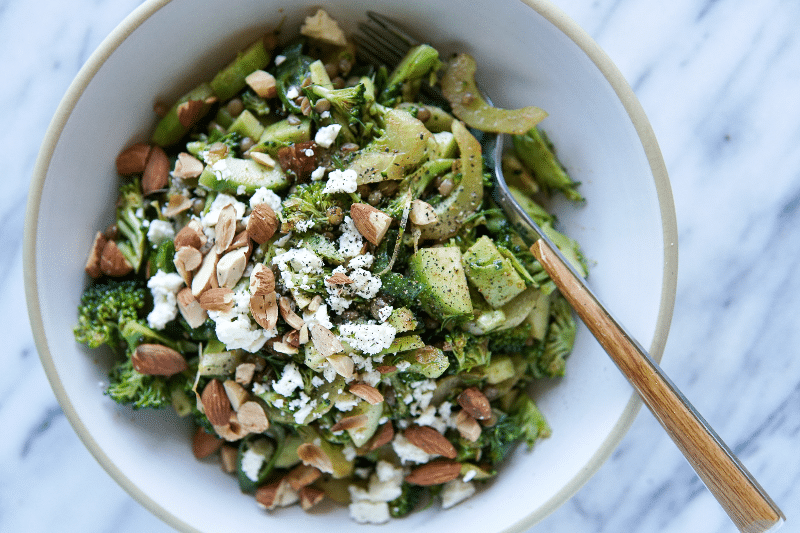
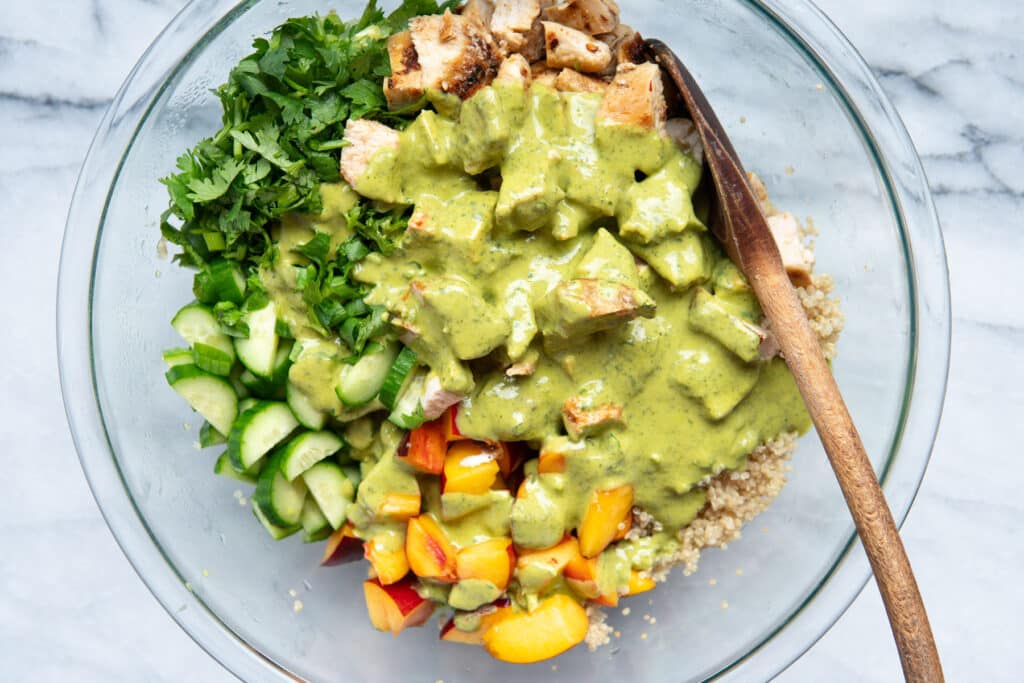
Fat adds richness, boosts flavor, and helps a meal feel satisfying.
That could come from:
- Olive oil in the dressing
- Avocado
- Nuts or seeds
- Cheese
- Olives
- Pesto
- A creamy yogurt-based sauce
You don’t necessarily need to add several different sources. A generous vinaigrette, some feta, or half an avocado may be plenty, depending what else is in the salad.
Make it taste genuinely good
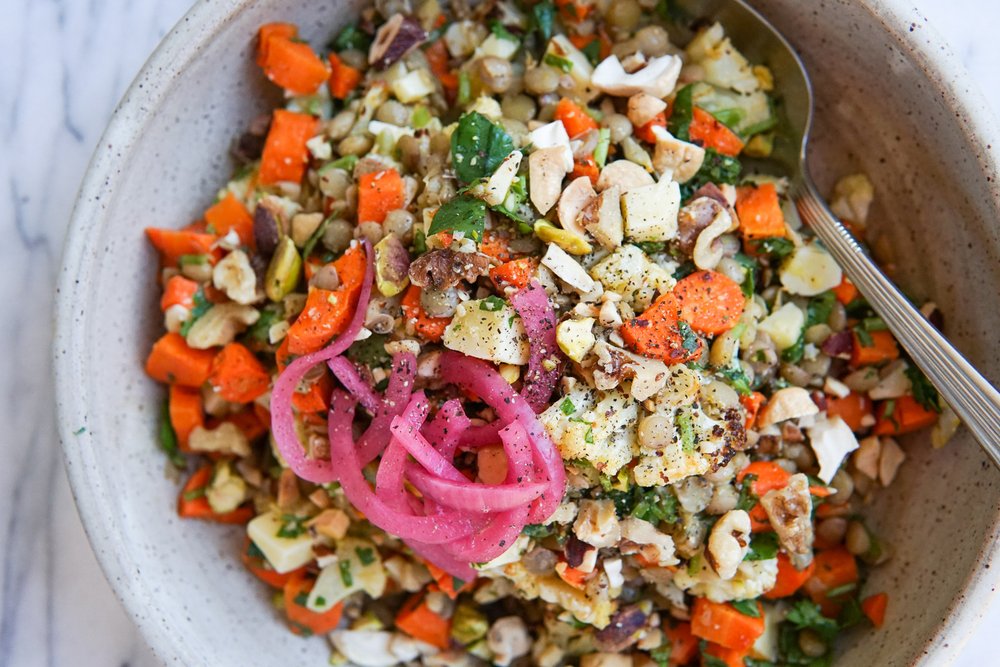
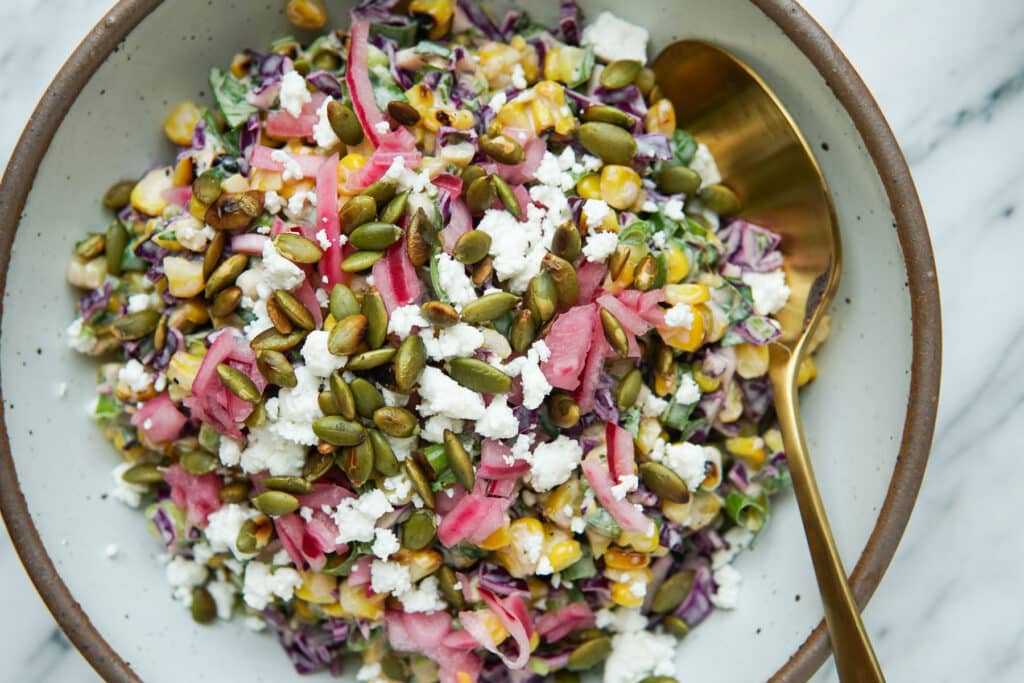
A salad can contain all the “right” ingredients and still leave you unsatisfied if it’s bland or feels like something you’re forcing yourself to eat.
Make sure your salad includes enough salt, acidity, and texture. A good dressing should coat the ingredients rather than disappear at the bottom of the bowl.
I like to include some combination of:
- Lemon juice or vinegar
- Fresh herbs
- Toasted nuts or seeds
- Cheese
- Pickled onions
- Olives or capers
- Something crunchy
- Something creamy
- A punchy dressing
These contrasts are what makes salads interesting. Think juicy tomatoes with crunchy cucumbers, creamy avocado with toasted nuts, salty cheese with sweet peaches, or chewy grains with crisp vegetables.
Cooking Club dinner salads
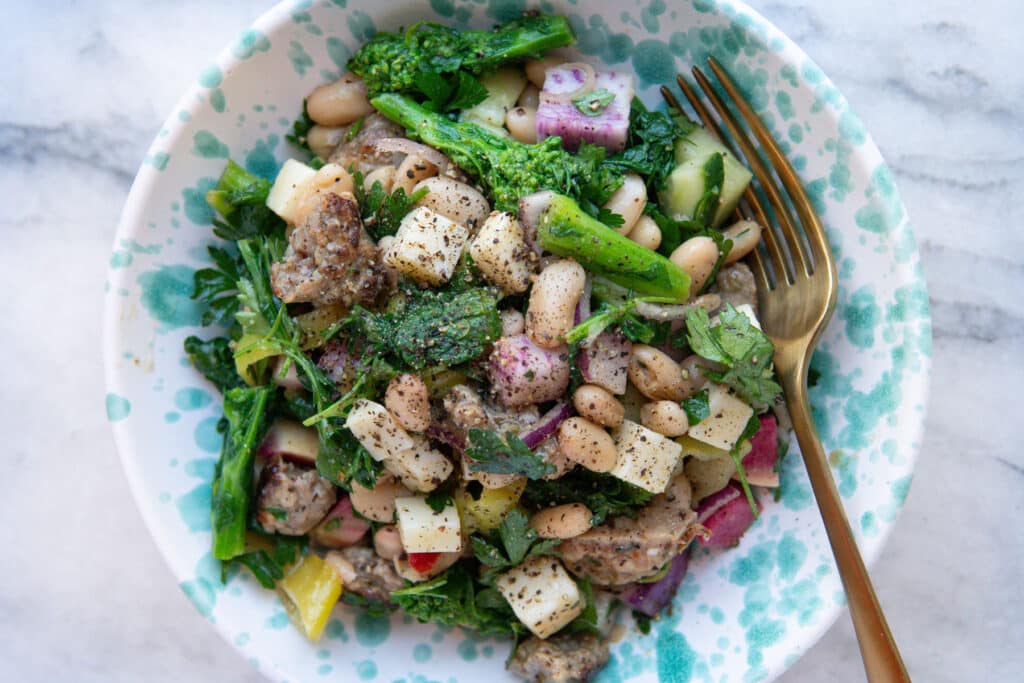
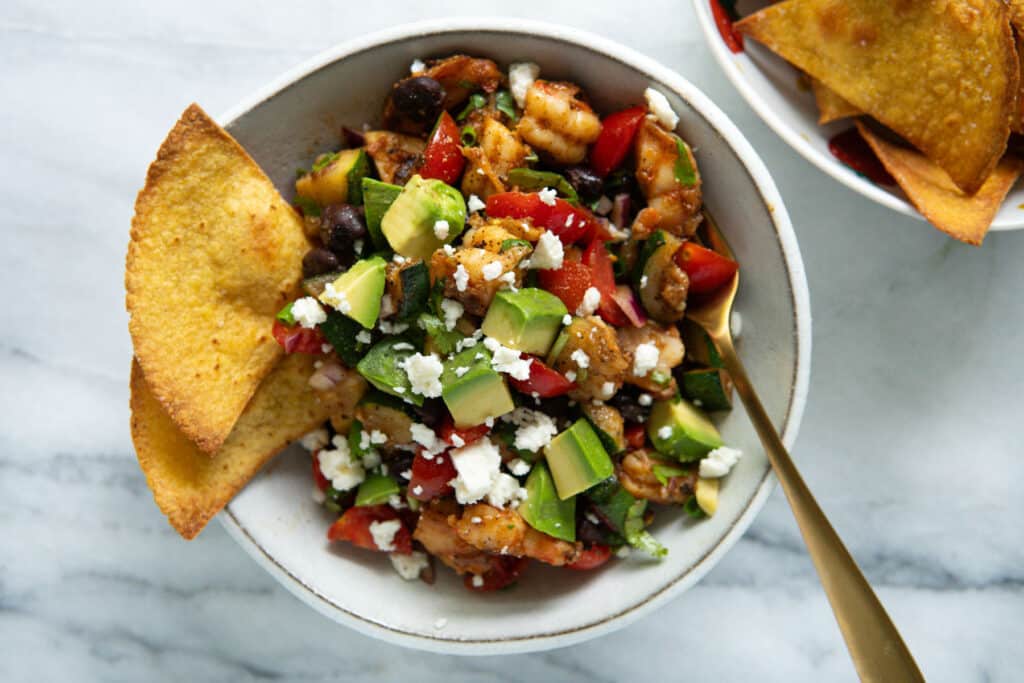
Here are a few Cooking Club salad recipes that are substantial enough to stand alone as a meal.
- Sheet Pan Sausage and Peppers Arugula Salad
- Best Ever Lentil Salad
- Sheet Pan Sausage + Potatoes Kale Salad
- Sheet Pan Tahini Chicken Caesar Salad
- Cilantro Lime Grilled Steak and Bean Salad
- Italian Sausage Broccolini Bean Salad
- Chopped Chicken and Peach Quinoa Salad with Cilantro Lime Dressing
- Summer Shrimp and Bean Salad
- Sheet Pan Salmon and Potato Salad
Easy No-Recipe Salad Formulas
Recipes are great, but you don’t need a formal recipe every time.
Just think:
Carb + protein + veg/greens + dressing + toppings:
- Farro + grilled chicken + tomatoes + cukes + scallions + feta + lemony dressing
- Cooked potatoes + green beans + cukes + herbs + greens + mustardy dressing + cooked salmon on top
- Rice + edamame + cabbage + scallions/cilantro + sesame dressing + avocado + peanuts
A little prep for easy salads
The key to throwing easy salads together is having a few components prepared ahead of time—especially the ones that require cooking. The last thing most of us want to do on a hot day is turn on the oven and cook an entire meal!
A little advance prep gets you about 75 percent of the way there.
- Carb: cooked potatoes, cooked grain, marinated beans
- Protein: grilled chicken or steak, cooked sausage, roasted tofu, boiled eggs
- Toppings: cheese, nuts, avocado, herbs, pickled red onions
Then, all you have to do is chop some vegetables or greens and make a dressing—which can be as simple as vinegar, salt, and olive oil.
The simple takeaway
A summer salad doesn’t need to be sparse or especially light to be healthy.
Start with plenty of colorful produce, then add a solid source of protein, carbohydrates, fat, and flavor. That’s what turns a bowl of vegetables into a satisfying meal—and helps prevent that familiar feeling of wondering what else you can eat an hour later.
The next time you’re making a salad for lunch or dinner, take a quick look at your bowl and ask:
Where is the protein? Where are the carbohydrates? Is there a variety of textures and flavors—crunchy, creamy, salty, or tangy? Is there enough dressing?
A few small additions can make all the difference.
leave your comments!