

5 benefits of fermented foods
Food fermentation has been used for thousands of years as a way to preserve food. During fermentation, microorganisms like bacteria and yeast break down components of food, creating acids and other compounds that help prevent spoilage and give fermented foods their signature tangy, funky flavor. Some of the most popular fermented foods include kimchi, sauerkraut, […]
Food fermentation has been used for thousands of years as a way to preserve food. During fermentation, microorganisms like bacteria and yeast break down components of food, creating acids and other compounds that help prevent spoilage and give fermented foods their signature tangy, funky flavor.
Some of the most popular fermented foods include kimchi, sauerkraut, kombucha, miso, yogurt, kefir, and traditionally fermented pickles.
So let’s get into why I love fermented foods and why they’re worth adding to your diet (scroll all the way down to learn how to make sauerkraut at home)!
Makes certain nutrients easier to absorb
One cool thing about fermentation is that it can actually change the nutritional makeup of a food.
During fermentation, live cultures help break down components of the food, including compounds like phytates that can interfere with mineral absorption. This can make certain nutrients, including iron, zinc, calcium, and magnesium, easier for your body to absorb and use.
Fermentation can also increase the amount or availability of certain vitamins and beneficial compounds, depending on the food and fermentation process.
So while fermented cabbage isn’t necessarily packed with dramatically more nutrients than fresh cabbage, fermentation can make some of the nutrients already there more available to your body. (1)
Supports a diverse gut microbiome
Your digestive tract is home to trillions of microorganisms that make up what we call the gut microbiome. Having a diverse microbiome is generally associated with better digestive and overall health.
Fermented foods are unique because many of them contain live cultures along with compounds produced during the fermentation process that can interact with the microbes already living in your gut.
One really interesting Stanford study had healthy adults eat either a diet high in fermented foods or a diet high in fiber for 10 weeks. The fermented-food group experienced an increase in gut microbial diversity—the more fermented foods they ate, the greater the effect. (2)
That doesn’t mean you need to start eating kimchi at every meal, but regularly including a variety of fermented foods can be one way to support your gut microbiome.
Supports immune health
Your gut and immune system are closely connected.
The microbes living in your digestive tract interact with immune cells and help maintain the intestinal barrier—one of the ways your body protects itself from things it doesn’t want getting into circulation.
Fermented foods may support this relationship through their live cultures as well as the many compounds produced during fermentation. Research suggests that eating fermented foods can influence immune activity and help support a healthy, balanced immune response. (1, 2)
Just one more reason why taking care of your gut can have benefits that extend well beyond digestion!
May help reduce inflammation
This is one of the more interesting areas of fermented-food research.
In that same Stanford study, people eating a diet high in fermented foods had reductions in several markers of inflammation. Researchers found lower levels of 19 inflammatory proteins along with changes in immune-cell activity. (2)
That doesn’t mean fermented foods are a treatment for inflammation or that one scoop of sauerkraut is going to magically change your health. But it does suggest that regularly including fermented foods may be one way your overall diet can help support a healthy inflammatory response.
It’s a good mood food
The gut and brain are constantly communicating with each other through what’s known as the gut-brain axis.
Your gut microbes produce and interact with all kinds of compounds involved in this communication, and researchers have found associations between differences in the gut microbiome and things like quality of life, anxiety, and depression. (3)
We still have a lot to learn here, and we can’t say that eating fermented foods will directly improve your mood. But because fermented foods can influence the gut microbiome, researchers are increasingly interested in whether they may also support the gut-brain connection.
How to add fermented foods to your meals
My personal favorites are kimchi and sauerkraut because they’re delicious, easy to find, and easy to add to meals.
I love the delicious funk and tang that fermented foods add to meals.
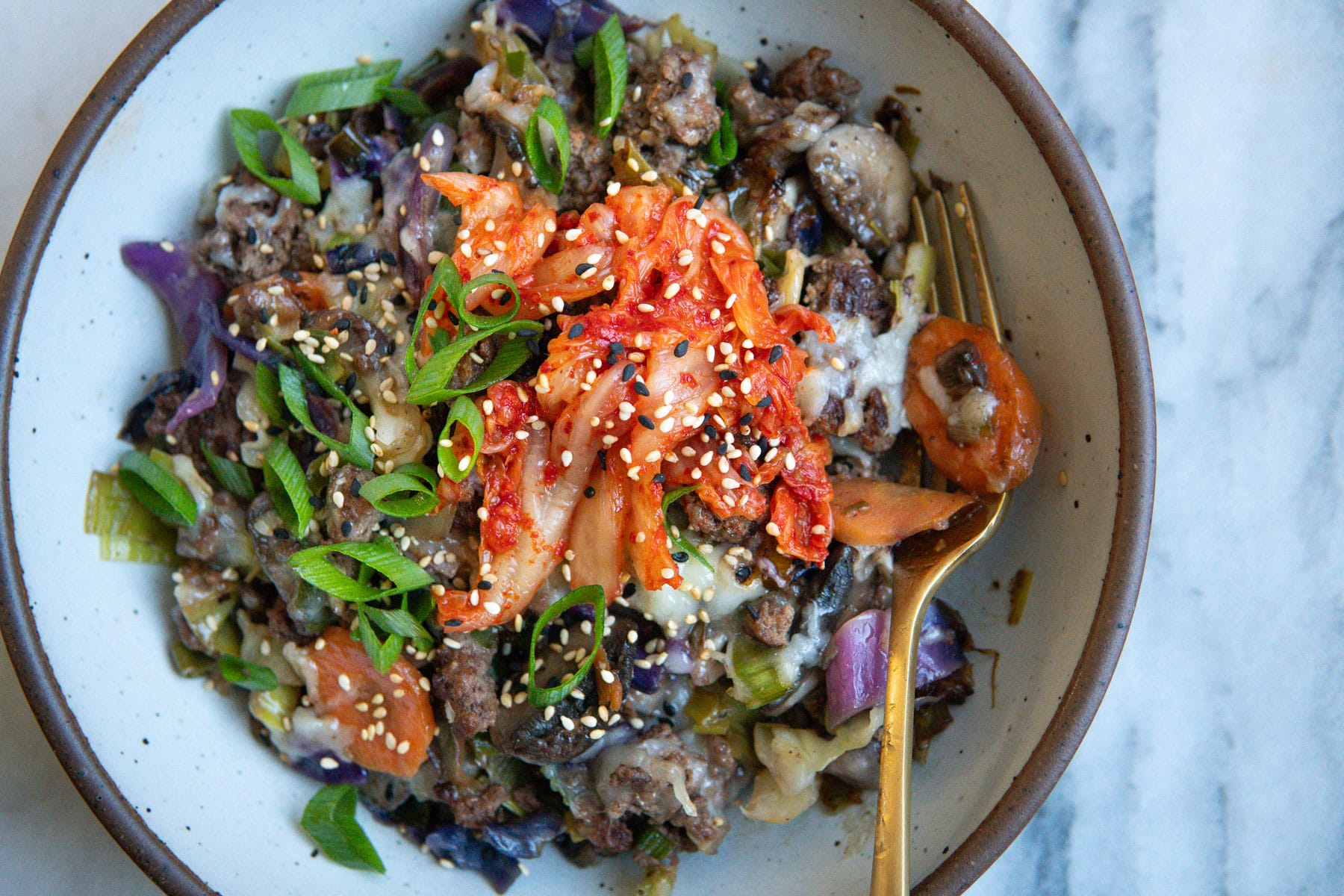
Kimchi is a spicy Korean fermented vegetable condiment that pairs particularly well with rice bowls, eggs, cheese, and beef.
Sauerkraut pairs especially well with mustardy flavors, sausages, and potatoes. One of my favorite nostalgic meals is sausage or smoked pork chops, potatoes (in salad or roasted form), and a side of kraut.
You can also simply eat a scoop alongside a meal or as a snack!
Below are some recipes that include or pair well with sauerkraut or kimchi:
- Cheesy Kimchi Beef and Veggie Bowls
- Instant Pot Chicken and Rice Porridge with Cilantro Ginger Oil
- Buttered Rice + Greens with Soy Fried Eggs
- Korean Bibimbap Bowls
- Korean Beef Tacos
- German Potato Salad
- Roasted Potato Romanesco Bowl with Creamy White Bean Dijon Sauce
- Charred Cabbage Sausage Lentil Bowls
P.S. If you’re specifically looking for the benefits of live microorganisms, look for refrigerated products that say something like “contains live cultures” or “live and active cultures” on the label. For sauerkraut and kimchi, I typically look for unpasteurized versions made through traditional fermentation. Pasteurized fermented foods kills those live cultures and the benefits that come with them.
Fermented foods vs. probiotic supplements
Fermented foods and probiotic supplements aren’t quite the same thing.
Technically, a probiotic is a specific live culture that has been shown to provide a health benefit when consumed in an adequate amount. While many fermented foods contain live cultures, they haven’t necessarily been studied individually enough to technically call all fermented foods “probiotic foods.” (4)
For general gut health, I tend to take a food-first approach and encourage regularly eating fermented foods when you enjoy and tolerate them.
Along with beneficial microbes and compounds created during fermentation, you’re also getting everything else that comes with the whole food—protein in yogurt and kefir, vegetables and fiber in kimchi and sauerkraut, and a variety of vitamins, minerals, and other beneficial plant compounds.
Probiotic supplements can absolutely have a place, particularly when a specific strain has research supporting its use for a particular condition, but more isn’t necessarily better when it comes to randomly adding probiotic supplements.
How much should you eat everyday?
There isn’t an established perfect amount of fermented food that everyone needs to eat.
If fermented foods aren’t already a regular part of your diet, start small. A tablespoon or two of sauerkraut or kimchi is plenty to start with, and you can gradually increase from there based on how you feel.
For foods like yogurt or kefir, a normal serving is obviously going to be larger.
Everyone’s gut microbiome is different, and some people may experience gas, bloating, or digestive discomfort when they suddenly eat a lot of fermented foods. There’s no need to force it!
I think the bigger goal is simply to include fermented foods regularly and in a way that you actually enjoy.
The takeaway
So, to sum it up:
Fermented foods are a simple way to support your gut health, and they may have benefits for your immune system, inflammation, nutrient absorption, and even the gut-brain connection.
You don’t need to overthink it or eat huge amounts. Just try to include fermented foods regularly in a way you enjoy—whether that’s a scoop of sauerkraut with dinner, kimchi on a rice bowl, or yogurt or kefir at breakfast.
And if you’re choosing fermented foods specifically for the live cultures, look for products that are refrigerated and labeled as containing live cultures.
Think of fermented foods as one small piece of an overall gut-friendly diet—not a magic fix, but definitely a worthwhile food to include!
How to make sauerkraut at home!
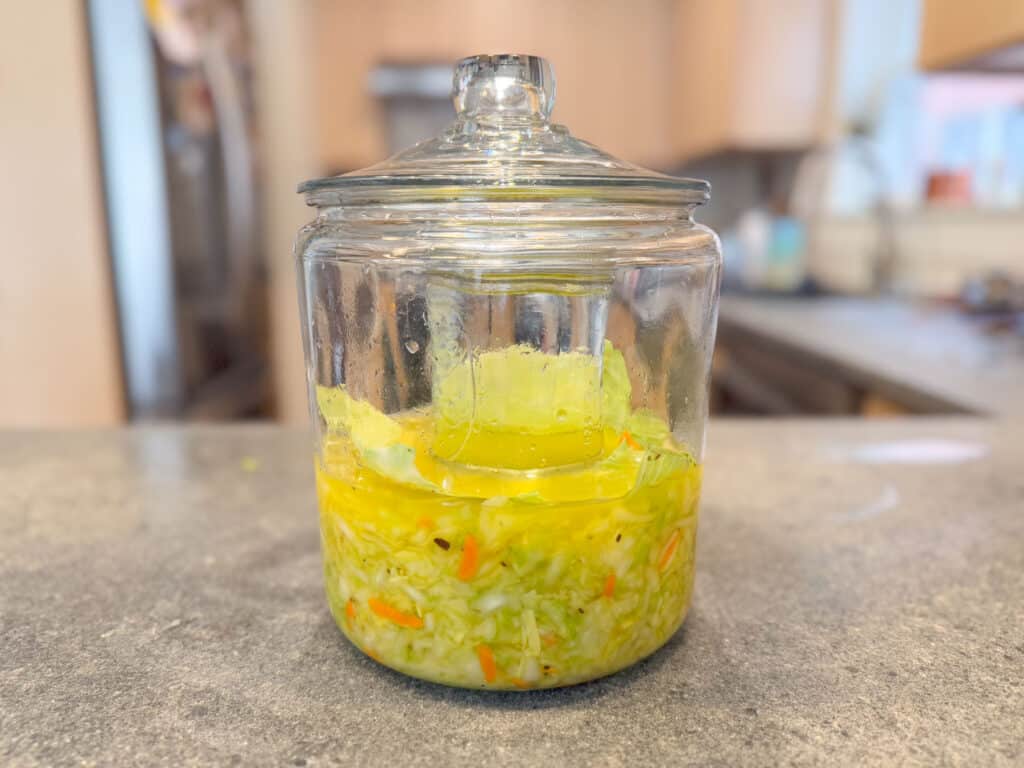
I used to make sauerkraut regularly and add it to bowls and salads—or just eat it on its own!
You can absolutely buy store-bought sauerkraut, but it’s surprisingly simple to make at home and a lot more affordable.
Find the recipe and video below for how to make it at home. I hope you give it a try!!
Resources
- Mukherjee A, et al. Fermented foods and gastrointestinal health: underlying mechanisms. Nature Reviews Gastroenterology & Hepatology, 2024.
- Wastyk HC, et al. Gut-microbiota-targeted diets modulate human immune status. Cell, 2021.
- Valles-Colomer M, et al. The neuroactive potential of the human gut microbiota in quality of life and depression. Nature Microbiology, 2019.
- Marco ML, et al. The International Scientific Association for Probiotics and Prebiotics (ISAPP) consensus statement on fermented foods. Nature Reviews Gastroenterology & Hepatology, 2021.
leave your comments!