

Why fiber matters (and why we don’t talk about it enough)
Protein has had a major PR moment over the last few years and for good reason. Protein matters. It supports muscle, blood sugar, hormones, and satiety — and I’ve written plenty about why it deserves a place at every meal. (Related: How much protein you actually need, High Protein Grocery List + Staple Meals, 6 […]
Protein has had a major PR moment over the last few years and for good reason. Protein matters. It supports muscle, blood sugar, hormones, and satiety — and I’ve written plenty about why it deserves a place at every meal.
(Related: How much protein you actually need, High Protein Grocery List + Staple Meals, 6 easy ways to get 30g of protein)
But somewhere along the way, another essential nutrient got quietly pushed to the sidelines: fiber.
Many people can tell me exactly how much protein they’re aiming for in a day, but very few know how much fiber they’re getting or why it matters so much. And that’s a problem, because fiber is one of the most important nutrients for digestion, metabolic health, hormone balance, and long-term wellbeing.
Most people are only getting 15-20g of fiber per day, but we want to aim for 30+ grams per day.
So let’s give fiber the spotlight it deserves!
What is fiber anyways?
Fiber is a type of carbohydrate found in plant foods that your body doesn’t digest. Instead of being broken down for energy (like carbs, fat, protein), fiber moves through your digestive system largely intact — and that’s exactly what makes it so powerful.
There are two main types (listed below), but keep in mind that most whole plant foods contain a mix of soluble and insoluble fiber — these categories highlight where foods tend to contribute most.
1. Soluble fiber: dissolves in water and turns into a viscous gel that helps slow digestion, support blood sugar balance, and can lower cholesterol.
- Dietary sources: oats, beans, flaxseed, apples/pears, citrus.
2. Insoluble fiber: doesn’t dissolve in water, so it’s the roughage that adds bulk and keeps things moving in your digestive system.
- Dietary sources: whole grains, nuts/seeds, leafy greens, cruciferous veggies, fruit and veggie skins (ex. potatoes with skin on).
You don’t need to micromanage the types. If you’re eating a variety of plant foods — vegetables, fruit, beans, whole grains, nuts, and seeds — you’re getting both!
Why fiber is so important
Fiber quietly supports almost every system in the body. Below are simple explanations of some of the top reasons why we should all be eating plenty of fiber.
Gut health & digestion
Fiber feeds your good gut bacteria and keeps digestion running smoothly. A fiber-rich diet is one of the most effective ways to reduce bloating, constipation, and digestive discomfort over time.
Blood sugar balance
Fiber slows the absorption of carbohydrates, which helps prevent blood sugar spikes and crashes after you eat. This matters for all the reasons why keeping a stable blood sugar is important, like sustained energy, mood, metabolic health, and fertility.
Heart health
A fiber-rich diet is linked to improved cholesterol levels and cardiovascular health over time. Soluble fiber helps bind cholesterol in the digestive tract so it’s excreted rather than reabsorbed, while fiber-rich foods also support lower levels of chronic inflammation — a key driver of heart disease. Together, these effects help protect blood vessels and support long-term heart health.
(Related: Cholesterol 101)
Satiety & appetite
Fiber helps meals feel satisfying. It works alongside protein and fat to slow digestion, keep you fuller for longer, and prevent the quick blood sugar dips that can lead to cravings, overeating, or feeling hungry again soon after a meal.
Detox & hormones
One of your body’s most important detox systems is your digestive tract — and fiber plays a key role in keeping it working properly.
Your liver breaks down excess hormones, toxins, etc…and sends many of them to your digestive tract to be eliminated through stool. Fiber helps this process by:
- Binding to waste products, including excess estrogen and cholesterol
- Helping move them efficiently out of the body
- Reducing the likelihood that these compounds are reabsorbed back into circulation
This is especially relevant for women because digestion is essential for binding and excreting excess estrogen. Low fiber intake is associated with higher circulating estrogen levels, which can contribute to symptoms like PMS, hormonal acne, endometriosis, PCOS, and perimenopausal changes.
Easy ways to eat more fiber
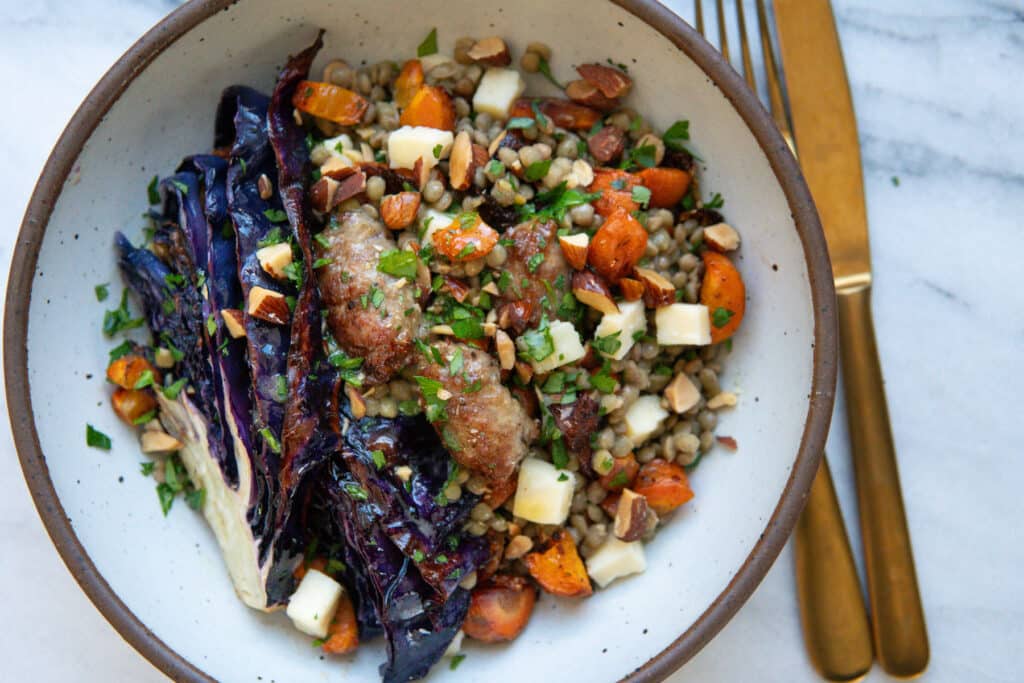
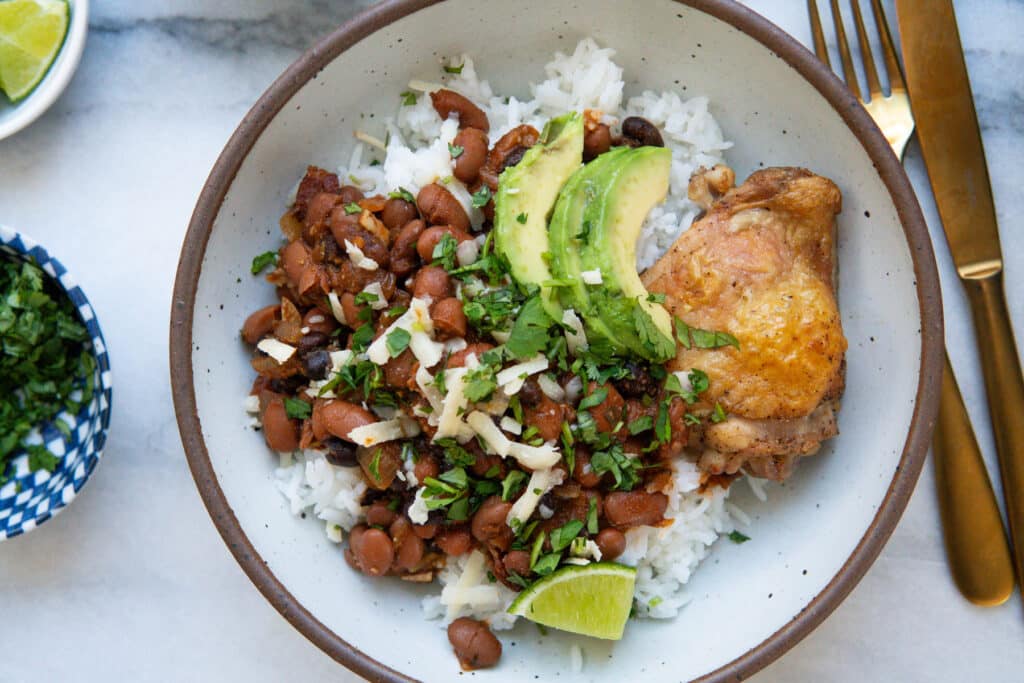

I try to make all of my Cooking Club recipes high in both fiber and protein, since that is what most people struggle to eat enough of. But since dinner is only one meal of your whole day, below are a few small tips to add more fiber to your other meals and snacks!
1. Add beans or lentils to soups, salads, and bowls.
- Keep a batch of marinated beans or lentils in the fridge to add to meals!
- Marinated beans/lentils: warm them up in the microwave, then toss with lots of salt, along with some vinegar and olive oil until they taste well seasoned. Store in the fridge.
- You don’t need a full bean-based meal — add a scoop of chickpeas to a salad or white beans to a grain bowl.
2. Add, don’t replace! Instead of swapping foods out, try adding fiber: throw greens into pasta, beans into soups, or vegetables into rice dishes.
3. Opt for whole grains or starchy vegetables some of the time (potatoes, sweet potatoes, carrots, parsnips, beets) as your carbohydrate.
- If you love white rice (like me) or pasta, just make an effort to eat it alongside plenty of veggies and protein.
- You don’t have to give up white rice or pasta. Mixing in brown rice, farro, oats, or whole-grain bread a few times a week goes a long way.
4. Take time top chop up your vegetables for the week. Even better, roast a sheet pan of veggies in the oven to add to meals. My go-to quick way to add veggies to my meals is to steam them (kale, broccoli, sweet potatoes, etc…).
5. Add one vegetable to meals you already eat – a handful of spinach in eggs, roasted vegetables with dinner, or sliced raw veggies on the side all count.
6. Keep fruit/veggie skins on when possible – leave the skins on potatoes, sweet potatoes, apples, pears, and squash when possible — it’s an easy fiber boost with no extra effort.
7. Top meals with nuts or seeds or eat nuts/seeds as a snack
- Sprinkle chia, flax, sunflower seeds, or chopped nuts onto yogurt, oatmeal, salads, or roasted vegetables
8. Build meals around vegetables and protein
- Carbs and fat are pretty easy to add to meals, which is why it’s helpful to focus on the protein and fiber first.
9. Snack with fiber in mind – pair fruit with nut butter, crackers with hummus, or yogurt with berries instead of reaching for fiber-free snacks.
10. Put avocado on top! This is one of my favorite easy ways to add fiber to a meal.
High-fiber Cooking Club recipes
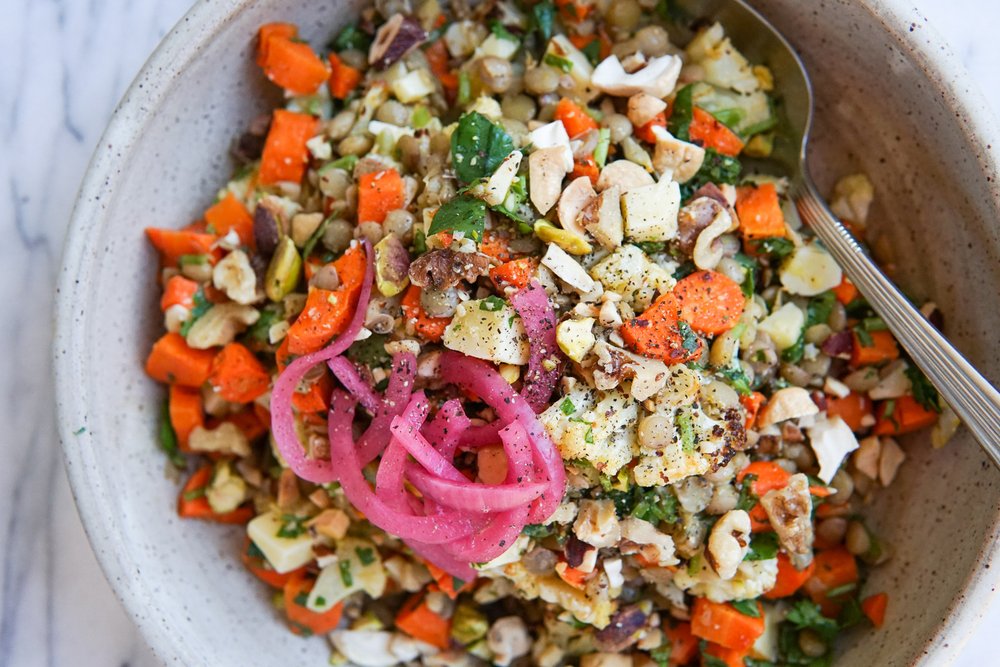


I try to make most of my recipes a good balance of protein and fiber especially, since those are generally what people struggle with most. Below are a few favorite high-fiber recipes:
- Crispy Chicken with Farro Cabbage Caesar Slaw
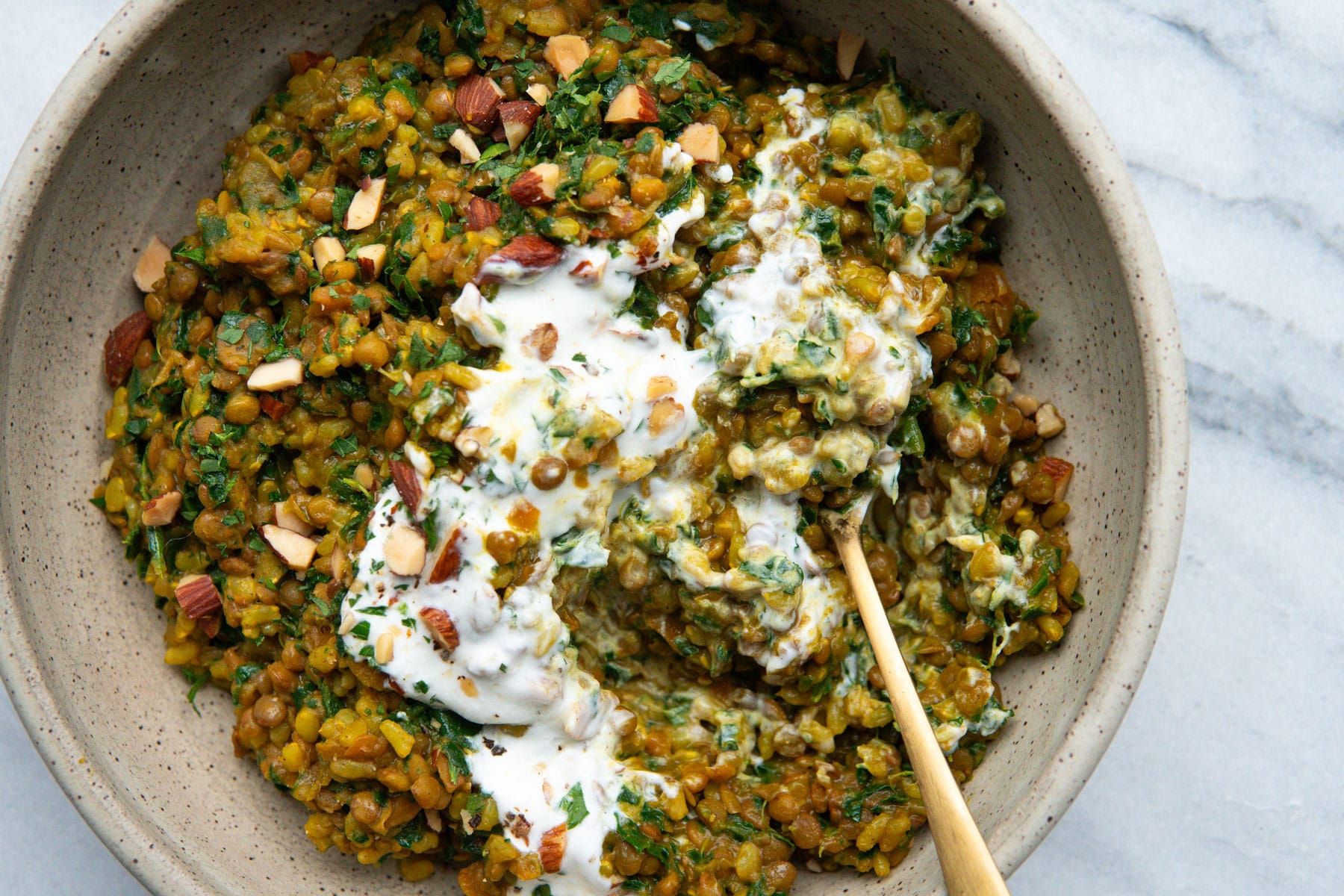
- Instant Pot Curried Lentils and Rice with Lemony Yogurt
- Best Ever Lentil Salad
- Skillet Sausage and Brussels with Pumpkin Seed Pesto
- Creamy Lentil Tomato Soup with Parmesan Toast
- Crispy Oven Tacos with Cilantro Jalapeno Sauce
- Miso Butter Beans with Lemony Beets
- Roasted Squash Sausage Apple Salad with Spiced Nuts
- Feta and Herb Sweet Potato Loaf
- Whole Grain Greek Yogurt Waffles
- Sneaky PB&J Chia Oats
Tips for going from low to high fiber
Jumping from very little fiber to a lot all at once can feel uncomfortable. The goal is to increase fiber gradually and support digestion along the way.
Below are a few tips:
- Go slow – add one fiber-rich food at a time rather than overhauling everything at once.
- Hydrate – fiber needs water to do its job. Drinking enough fluids helps prevent bloating and constipation.
- Cook your vegetables – lightly cooked vegetables are often easier to digest than raw, especially if you’re sensitive.
- Chew well – digestion starts in the mouth — taking your time can make a noticeable difference.
- Spread fiber throughout the day – instead of one very high-fiber meal, aim for smaller amounts at each meal.
The key takeaways
Like protein, fiber is a very important nutrient and is often underconsumed.
This blog post was just meant to give fiber a little spotlight, help you understand why it’s important, and how to eat more of it.
I’m certainly not advocating for tracking your fiber intake or worrying about the different types. Just make it a point to include a variety of fiber-rich vegetables, fruits, beans, whole grains, nuts, and seeds in your meals and snacks throughout the week.
leave your comments!